How to Hire and Manage Remote Teams Effectively in 2026
In 2020, virtually all companies worldwide, faced with the pandemic, hastily considered the possibility of switching to remote work, and in many cases, hiring remote development teams. This is clear — at that time, most countries were under restrictions, and no one could give predictions about how long it would last.
However, with the end of the pandemic in 2021, many professionals, especially in the IT sector, were reluctant to return to the office. Moreover, from 2020 to 2023, the share of employees working remotely worldwide greatly increased, rising from 20% to 28%.
Businesses had to get used to the new norm. And today, managing a remote workforce is no longer a challenge but a strategic advantage. Still, many companies around the world had various concerns about remote collaboration.
In this article, we’ll share the best practices for anyone looking to hire remote development team specialists and explain how to lead them with maximum efficiency.
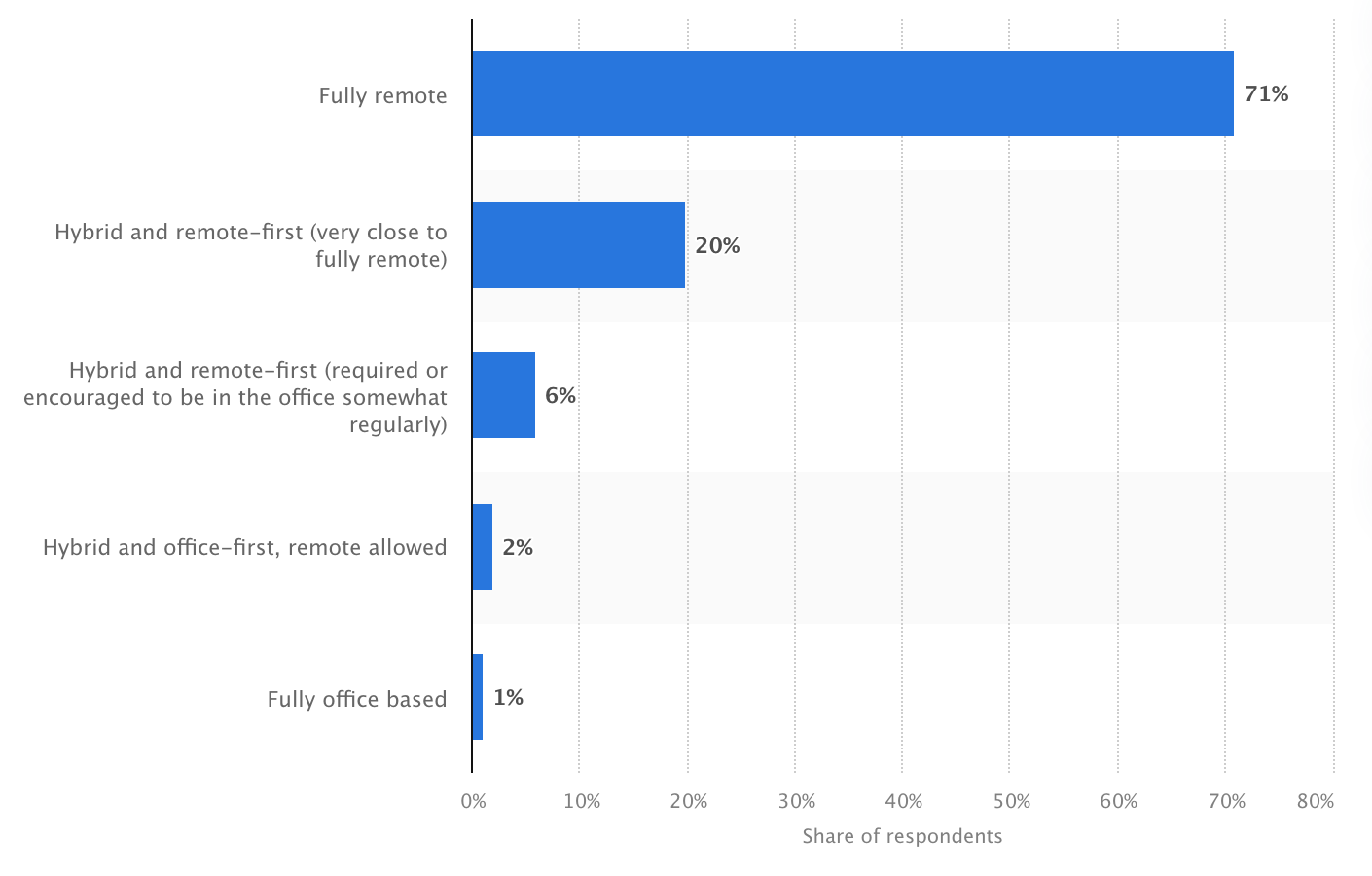
Percentage of specialists preferring remote working structures, Statista
The Benefits of Hiring Remote Software Developers
Although remote work isn’t a new trend, many businesses switched to it only in 2020 with the COVID-19 pandemic outbreak, reaching 56% of employees worldwide working from home.
According to Statista, the US, UK, Canadian, and Australian employees found a variety of benefits in remote work.
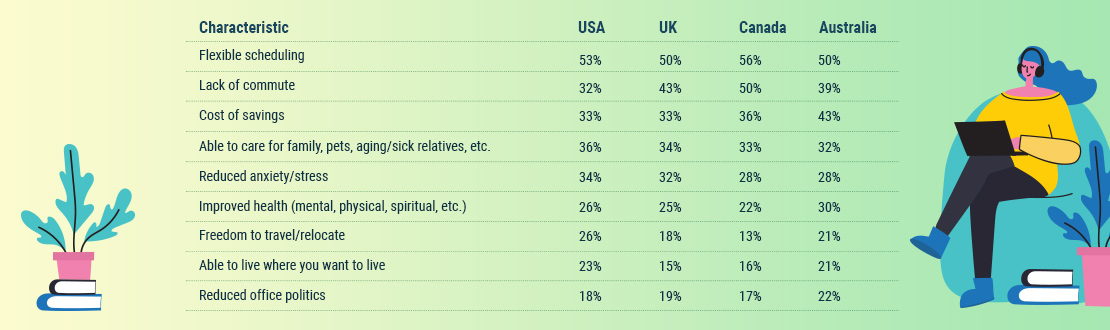
The most important were a flexible schedule and flexibility to live anywhere, absence of the necessity to commute, increased savings, ability to care for their families, pets, or sick relatives, reduced anxiety, improved health, and others.
For companies, the advantages of remote work are equally significant. Remote work opens access to a global talent pool, allowing them to hire highly qualified specialists with specialized knowledge regardless of geographical location.
It also reduces operating costs – not only on office space rent and utilities, but also on employee relocation expenses and the pressure of local salary standards, allowing organizations to invest more in talent development and project quality.
In addition to cost savings, remote work provides flexibility. Teams can expand or contract depending on project needs, which is especially valuable for startups or companies managing multiple projects simultaneously.
The diversity of remote IT teams, encompassing different cultures, regions, and professional backgrounds, contributes creativity, leading to more effective problem-solving and the generation of fresh ideas.
How to Hire a Remote Development Team?
The rapid switch from office work to working from home has triggered a wave of massive business digitization. Now, it’s much harder for businesses to stay competitive without a proper business app and tuned-in infrastructure for business inner workflow.
While there are many ready-made digital solutions for establishing remote communication and online collaboration, building a customized business application requires a whole IT team of professionals.
But how to build a remote team for creating your business app? There are five steps that you need to take.
1. Define Your Requirements
Any app development starts with clear objectives and requirements. To define what your future app’s main idea is and what functionality to include in it, you have to conduct thorough research of your business and its target audience.
This planning stage is obligatory, whether you are developing a web application, a native mobile app for iOS or Android, or a cross-platform solution that works across multiple devices.
The key questions you need to answer before searching for remote employees are:
- What level of requirements can you provide to the development team?
- What are your expectations and limitations in terms of time and budget?
- Would you like to create a fully functional app or an MVP?
- What features do you want to include in your app?
2. Make a Long List of Potential Partners
As you’ve defined your app’s requirements, it’s time to go online and compile a long list of your potential development partners. Include in the list all the companies that provide software development teams with relevant expertise to build your digital solution.
There are several methods you can use to find professional app development teams:
- Ask someone you know who has developed their apps with a virtual team
- Type your request in a search engine like Google or AI-based ChatGPT
- Search for your remote app development partners on professional sites, such as
3. Make a Short List of Development Partners
Now, you have about 10 to 20 software development companies on the list. To cut down the long list and make it short, you should go deeper in your exploration. For this, you can:
- Investigate software development providers’ portfolios on their sites and find out if they have similar development cases to the app you want to build.
- Check out companies’ social media networks and corporate blogs.
- Study third-party sites that provide feedback on the chosen companies.
- Have an online meeting with the selected software development companies’ representatives.
4. Conduct Technical Interviews
Online technical interviews with the remote IT team are very similar to the offline format. However, they require greater attention to detail. The tech side determines what you can do during your interviews.
Think about whether you need to share any documents with the remote team members, show your screen, or establish a conference with several specialists for them to ask questions from their location.
For a structured technical interview, be ready to describe your project scope, explain in greater detail what functions you expect your app to perform, and which extra features you want to include in it.
Besides, you can formulate some project-related questions. For example, you can ask the team’s opinion on how they could improve your application or how to change it to make it more productive.
Effective teams with solid development skills can share their experience from previous projects and add valuable ideas to your app.
5. Ask for References
One more effective way to find out if a software company is a good fit for your development project is to ask for references from their current and previous clients.
Get in touch with the businesses they have worked with and ask in-depth questions about the working process and the outcomes. This way, you’ll learn the specifics of the chosen development company and get more insights into how they organize their work.
Best Practices for Managing a Remote Team
Hiring the right team is only half the equation. Successful remote collaboration depends heavily on how work is organized and regulated on a daily basis. Here are some tips for managing remote workers.
Communication with Remote Workers
With a distant working style, it is hard to remain on the same page with the remote team. That’s why communication is essential.
To make your remote work efficient and satisfying, establish a communication and meeting policy. Consider the frequency and length of video conferences and daily check-in meetings. The most important part of all the meetings and calls is that they are regular and predictable.
Above the daily check-ins and casual talks, project managers and stakeholders have to elaborate on the team’s tasks that they need to complete and track their progress. 
For this, many IT companies provide online access to the project management systems they use. It helps to establish a regular schedule and keep track of the project development progress.
Focus on Outcomes, Not Activity
An effective practice to increase development team members’ engagement in your project is to focus on the project outcomes rather than the activities they perform.
Clearly define the project goals, milestones, interim results, deadlines, and outcomes. These parameters will help you to define if your project is developing successfully or starts lagging behind.
Encourage a company culture where team members are accountable for outcomes but empowered to choose how they achieve them. Trusting the team to manage their time and methods increases motivation, employee engagement, and creativity.
Promote Structured Collaboration
Managing a remote workforce often involves dealing with different time zones, which can complicate collaboration.
Use tools for synchronous and asynchronous work, such as collaborative documents, shared repositories, and task boards, so that progress continues even when team members aren’t online at the same time.
Besides, define clear roles and responsibilities for every team member to avoid overlaps or confusion. A RACI matrix (Responsible, Accountable, Consulted, Informed) can be useful for complex projects. Clear accountability guarantees everyone knows who owns each task and reduces the risk of miscommunication.
Provide Regular Feedback and Recognition
Remote teams can sometimes feel disconnected, making feedback and recognition even more important. Schedule regular one-on-one check-ins to discuss performance, problems, and career development.
Publicly recognize achievements in team meetings or through internal communication channels to reinforce positive behaviors and boost morale.
Invest in Remote Team Management Tools
Equipping your team with the right communication tools and training helps them perform efficiently. This includes collaboration platforms, secure file-sharing systems, version control tools, and productivity trackers.
Training programs on remote best practices, time management, or new technologies can help keep the team skilled, confident, and aligned with your project’s needs.
Bottom Line
Remote work is no longer tied to lockdowns or crisis response. In today’s environment of widespread remote working structures, businesses have to adapt their strategies, processes, and team management practices to remain competitive.
To create their digital solutions and at the same time stay within their budgets, companies can hire remote engineers. And though distant working mode requires some extra effort related to managing remote development teams, it can be a good way to build powerful and engaging apps, avoiding the necessity to visit an office.